


London Experience Week is at its strongest when it makes clear that the Experience Economy is not a local conversation with occasional international guests, but a genuinely global exchange of ideas, methods and ambitions.
The work shaping this sector now is being built across borders: through collaborations that bridge cultures, through formats designed to travel, through destination-led partnerships, and through new ways of understanding how experiences sit inside wider social and civic systems. That is the idea behind this batch.
What connects these speakers is not simply geography, but perspective.
They are all, in different ways, grappling with the question of how experiences move across contexts without losing meaning. Some are building at scale across cities and countries. Some are thinking about ecosystems rather than single productions. Others are using the language of protest, community or world-building to show that experiences do not exist in a vacuum, but in relation to public life, cultural identity and shared belonging.
Together, they make the case that the future of this field will be shaped not only by creative excellence, but by the ability to learn across markets and cultures without flattening what makes a work distinctive.
For LXW, that is an important message to send early.
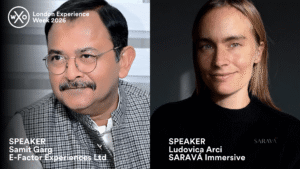
Samit Garg & Ludovica Arci explore how Shiva Immersive reimagines Indian mythology through large-scale storytelling, technology and global creative collaboration.
READ MORE: How the First Immersive Show on Indian Mythology Came to Life

Brent Turner offers a practical playbook for how and when live formats can scale internationally without losing quality or local relevance.
READ MORE: Beyond Borders: The Playbook for Global Event Scaling

Seth Lieber shows how destinations can fund, support and prove partner-led experiences without needing to own the entire delivery model.
READ MORE: How DMOs Fund, Scale, and Prove Partner-Led Experiences Without Owning Them
Katrina Lat draws lessons from reviewing more than 800 immersive works to ask what quality really means across contexts, formats and technologies.
READ MORE: High Tech, Low Tech, No Tech: Patterns Observed Across 800+ Immersive Works
오주석 Jooseok Oh reflects on South Korea’s martial law crisis through the lens of “human technologies” and the collective experience of civic action.
READ MORE: Human Tech Under Martial Law: Lightsticks, Flags, Prepayment & BARAM
Ilze Mertena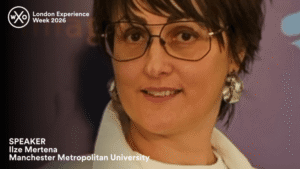 maps experience ecosystems beyond the individual encounter, showing how value is created across partners, publics and places.
READ MORE: Beyond the Individual Experience: Mapping Experience Ecosystems
Richard Maddock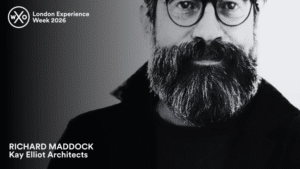 asks how immersive places of escape might also help people rebuild the world they are trying to escape from.
READ MORE: What if Places of Escape Could Help Rebuild the World We’re Escaping From?
Abraham Burickson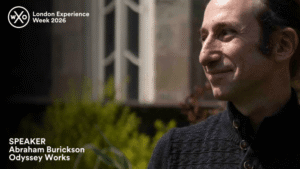 explores how experience design can be used in the service of better systems, broader participation and more constructive futures.
READ MORE: Worldbuilding the World
Come to London Experience Week this April for content like this: internationally minded conversations about experience as culture, infrastructure and public imagination.